Preventing Pressure Sores in the Hospital and Home Setting
Pressure ulcers, also known as bedsores or pressure sores, are localized injuries to the skin and underlying tissue. They are most often caused by prolonged pressure, friction, or shear. This blog post will explore the risks associated with pressure ulcers and identify common locations where they develop in home and hospital settings, emphasizing the need for prevention and timely intervention.
What Are Pressure Sores?
Pressure sores happen when constant pressure reduces blood flow to the skin and nearby tissues. Without enough blood flow, the skin and tissues can start to break down, resulting in damage. These sores are grouped into stages based on how deep the damage goes:
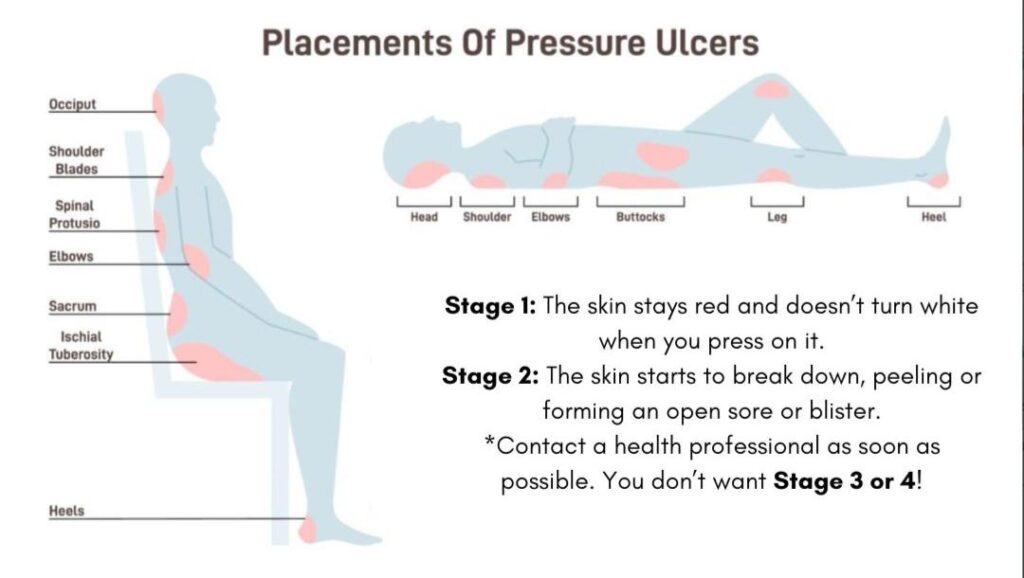
- Stage 1: The skin stays red and doesn’t return to white when you press on it.
- Stage 2: The skin starts to break down, peeling or forming an open sore or blister.
- Stage 3: The sore becomes deeper, full thickness skin loss reaching the fatty tissue below the skin.
- Stage 4: The sore is very deep, possibly exposing muscle or bone.
There are also sores called “unstageable” and “deep tissue injuries,” which mean the damage is serious but not fully visible.
Who Is at Risk?
Pressure sores can affect individuals across various settings, but certain factors increase susceptibility. Here are some common reasons why:
- Staying in One Position Too Long: People who are confined to a bed or wheelchair are at the highest risk. Studies estimate that up to 70% of pressure sores occur in individuals with limited mobility, particularly those in long-term care settings.
- Older Age: As we age, our skin becomes thinner and more fragile.
- Poor Nutrition: Nutritional deficiencies in protein and vitamins, can make the skin weaker with slower wound healing.
- Incontinence: Prolonged wet or soiled skin from urine or stool can break down more easily.
- Chronic Conditions: Diabetes, poor circulation, or nerve damage can make it harder to feel or heal from sores.
- Hospital Stays or Surgery: Around 10-18% of patients in acute care hospitals develop pressure sores, especially those who stay for extended periods.

Where Do Pressure Sores Usually Happen?
Pressure sores often form on bony parts of the body where there’s less padding from fat or muscle. These are the most common places:
In Hospitals especially where the patient may have prolonged immobility, such as post-surgery or intensive care units
- Lower Back and Tailbone: These areas are under pressure when lying on your back
- Heels: The back of the heels can rub against the mattress
- Hips: Lying on your side puts pressure on the hip bones
- Shoulder Blades and Spine: Pressure from lying on hard surfaces can cause sores here
- Groin Area: urine catheter tube up against the skin for long periods or laying on it
- Back of the Head: This is more common in children and older adults
At Home the risk of pressure sores arises primarily from limited mobility and inadequate resources for prevention
- Lower Back and Tailbone: Sitting or lying for long periods puts pressure on this area
- Heels: Without special cushions or pillows, the heels are at risk “float the heels”
- Elbows: Resting elbows on hard surfaces can lead to sores
- Sitting Bones: People in wheelchairs may develop sores on the bones they sit on
- Sides of Ankles: Leaning on the foot rest of wheelchair
- Ears: Sleeping on your side or using oxygen tubing can put pressure on the ears
- Top of Toes: Blankets that lay heavy on top of feet
How Can You Prevent Pressure Sores?
Pressure sores are easier to prevent than to treat, and there are simple things you can do to help:
- Change Positions Often: If the person is in bed, try to change their position every two hours; If they’re in a wheelchair, encourage them to shift their weight every 15 minutes and sit on a waffle cushion
- Use Special Cushions or Mattresses: These can help spread out pressure and keep sores from forming; utilize pillows or a draw sheet
- Keep Skin Clean and Dry: Gently clean and dry the skin every day, and use barrier creams if there’s a risk of wetness from incontinence.
- Provide Healthy Meals and Drinks: Foods rich in protein, vitamins, and minerals keep the skin strong. Staying hydrated is also important.
- Look for Early Signs: Check the skin daily for redness, swelling, or any open areas. Catching problems early can prevent them from getting worse.
- Educate Yourself: Learn about the risks and prevention tips from healthcare providers or trusted resources.
If a Pressure Sore Develops
Caregivers in all environments should regularly inspect common pressure points for redness, discoloration, swelling, moisture or signs of skin breakdown. Even with the best care, pressure sores can still happen. If you notice one, act straightaway:
- Relieve Pressure: Adjust the position so the affected area isn’t under pressure anymore.
- Clean the Area: Gently wash the sore with mild soap and water, then pat it dry.
- Protect the Skin: Use foam dressings recommended by a healthcare professional.
- Call for Help: If the sore is getting worse or not healing, contact a medical professional.
The Role of Healthcare Facilities
It’s important to note that The Centers for Medicare and Medicaid Services (CMS) mandates all healthcare facilities participating in the Medicare program to track and report data on pressure injuries. This ensures accountability and encourages consistent prevention measures in hospitals and nursing care facilities.
Challenges in Care
Despite preventive measures, pressure sore management faces challenges in both settings:
Hospital Settings: High patient-to-nurse ratios and prolonged ICU stays can hinder routine care.
Home Settings: Various types of neglect, limited access to specialized equipment, financial constraints, and lack of caregiver training can complicate prevention and treatment
Mortality and Pressure Sores
Pressure sores can have severe consequences if not managed properly. In the United States, complications from pressure sores contribute to approximately 60,000 deaths each year. This highlights the importance of prevention, early detection, and proper care to reduce such risks.
Final Thoughts
Whether you’re caring for a loved one at home or they’re in a hospital, understanding the risks and knowing what to look for can make a big difference the prevention of pressure sores. By prioritizing mobility, skin care, nutrition, and education, we can improve the quality of care for individuals at risk of pressure sores, ensuring their comfort and dignity. Remember, you’re not alone in this—healthcare professionals are there to support and guide you every step of the way.


Join the List
Stay up to date & receive the latest posts in your inbox.